
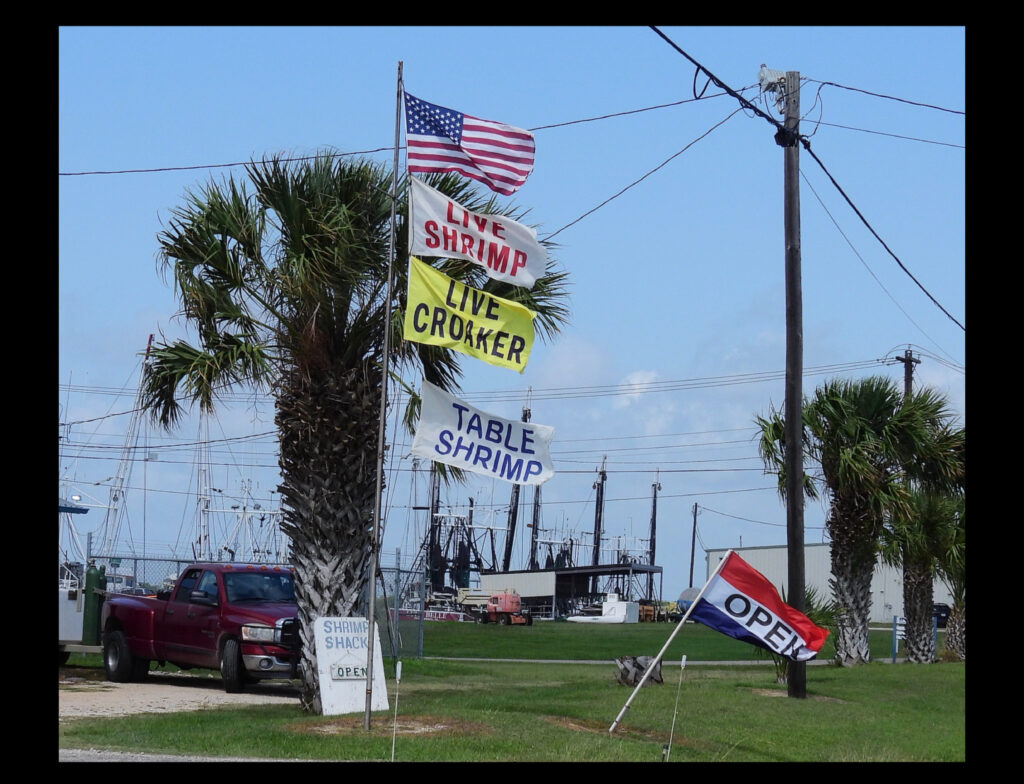
Shrimp Shack
https://www.facebook.com/shrimpshackpalacios/


First Shrimping Family. Read all about it on the Chamber of Commerce’s site https://palacioschamber.com/palacios-first-shrimping-family/.
“Meanwhile, he and the boys loaded up the “Helen B” and headed back to Alabama to see the rest of the family. While there, Fred, Sr. bought another boat, the “Emma”, son, Ted, married Alice Seaman and son, Fred, Jr. married Mary Kryger. Olie never married and always lived with brother, Ted.”
The Bates Family https://palacioschamber.com/the-bates-family/
“The cannery was a big success and employed many of the people in Palacios. Ted, Jr.’s mother, Alice, worked at the cannery and told how they would blow the factory whistle at 4:30 a.m. and the work started at 5:00 a.m”
Alice’s parents, Henry and Dora Seaman, were Greg’s great grandparents.
Documents show that Greg, the great great great grandson of William Christopher Seaman [1796-1844] is of the sixth generation of Seaman seamen working the seas from Nova Scotia where parallel with the small-boat fishery, a great schooner fleet developed in the northwest Atlantic to Biloxi, Mississippi where its flag features a red background with a white shrimp in the center representing the city’s thriving seafood industry to Bayou La Batre “The Seafood Capital of Alabama” to Palacios “The Shrimp Capital of Texas”.
William C Seaman owned the schooner ‘Pawline’ out of Biloxi, Mississippi.
From:
Chronicling Matagorda County Navigation District No. One’s 75th anniversary – Early years of the shrimping industry in the Port of Palacios
In 1979, annual median incomes of shrimp boat captains ranged from $15,000 to $25,000 and upward. Riggers and headers, particularly for Gulf trips, were also clearing a good wage. New bay and Gulf boats began to proliferate in the Palacios harbor. Some Palacios families were now spawning a second generation of successful fishermen, including the Seamans, Bates, Wallises, Kunefkes, Garcias and Aparicios. The Navigation District was home to a couple of shipyards where maintenance could easily be obtained and fish houses for unloading, transporting, icing and storing shrimp ringed the two turning basins. Talk among the District’s Commissioners began to turn to the need for even more dock space. Soon after, a double basin harbor was designed and, in 1982, Turning Basin No. 3 took shape to the west of the entrance to the other two basins.


